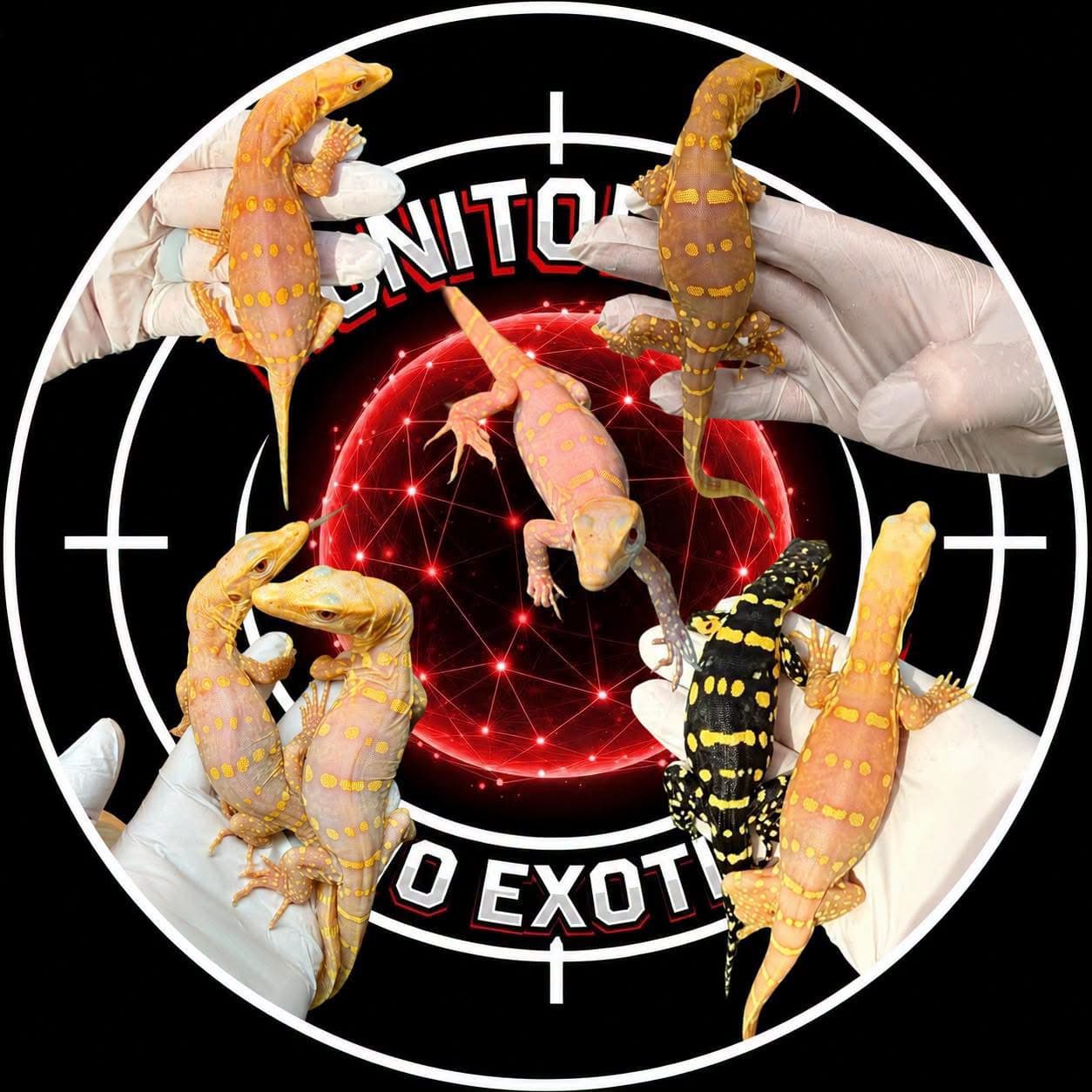
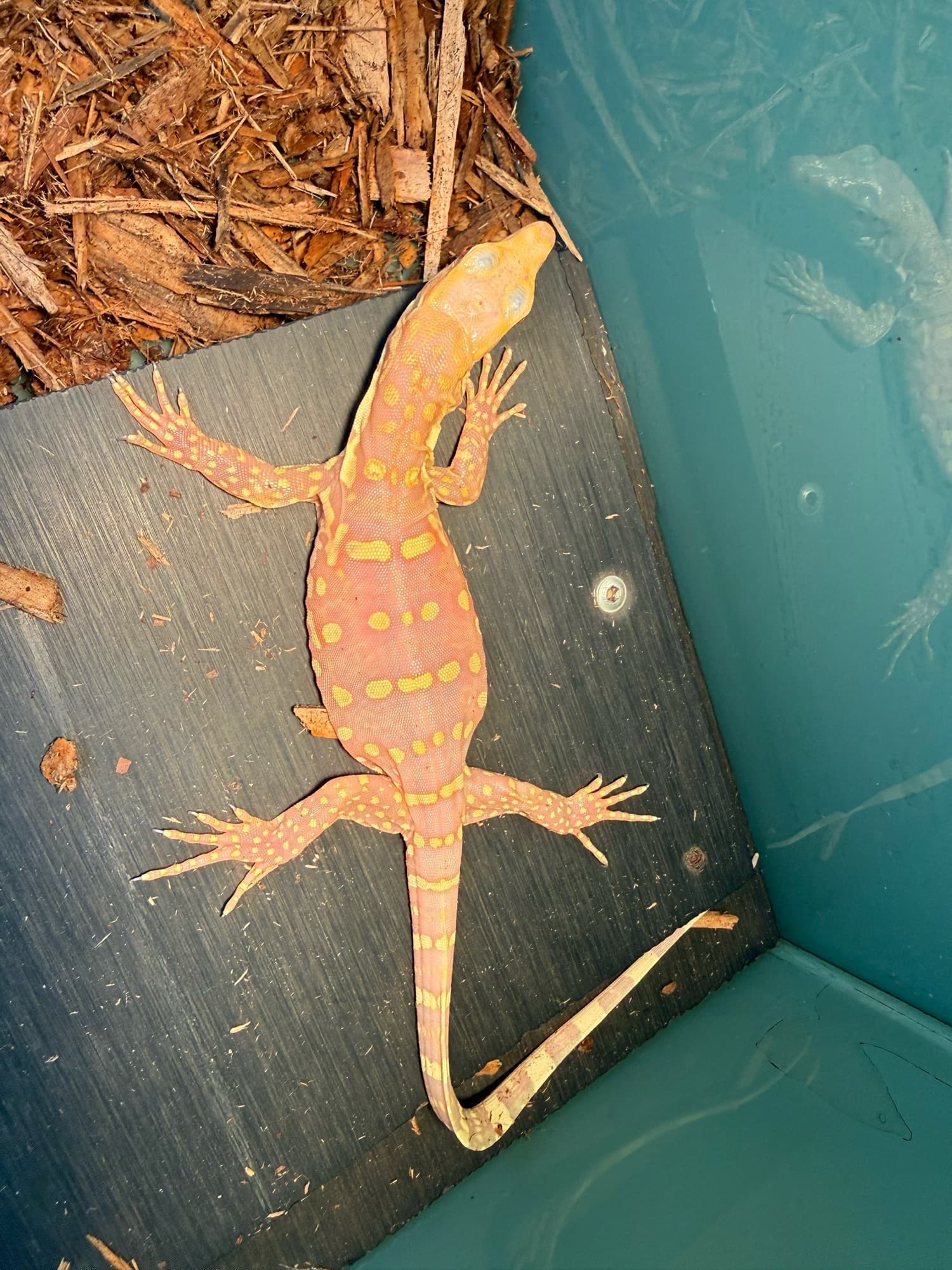
Albinism in salvators is a simple recessive trait — but the terms trip everyone up. Here's the plain-English version, and why a T- animal costs what it costs.
Every albino trait in Varanus salvator is a simple recessive — an animal needs two copies to show it, and a carrier with one copy is “het” (heterozygous) for it. That single fact explains the whole pricing structure.
T- (tyrosinase-negative)
A T- animal has no tyrosinase enzyme at all, so it makes no melanin. The result is the stark, white, red-eyed animal most people picture when they hear “albino.” It's the rarest and most sought-after morph in the species, which is why my T- animals sit at the top of the price sheet.
T+ (tyrosinase-positive) — partial albino
A T+ animal has partial tyrosinase function, so it hatches with some reduced melanin that shifts over time — warmer, lavender-to-brown tones rather than the pure white and red of a T-.
Coral
Coral is the warm, saturated line that comes out of albino crosses — peach and rose bases under bright yellow ocelli that deepen with age. It's the color a lot of keepers fall for first.
Why 'het' is the smart buy
A 100% het animal — like our Guru 100% het T- — looks normal but carries the gene. It's the ground-floor entry into a project: you pay a fraction of visual-albino money and hold the genetics to build on.
See the animals behind the writing.
Every line I keep is captive-bred, captive-born, and honestly represented.